
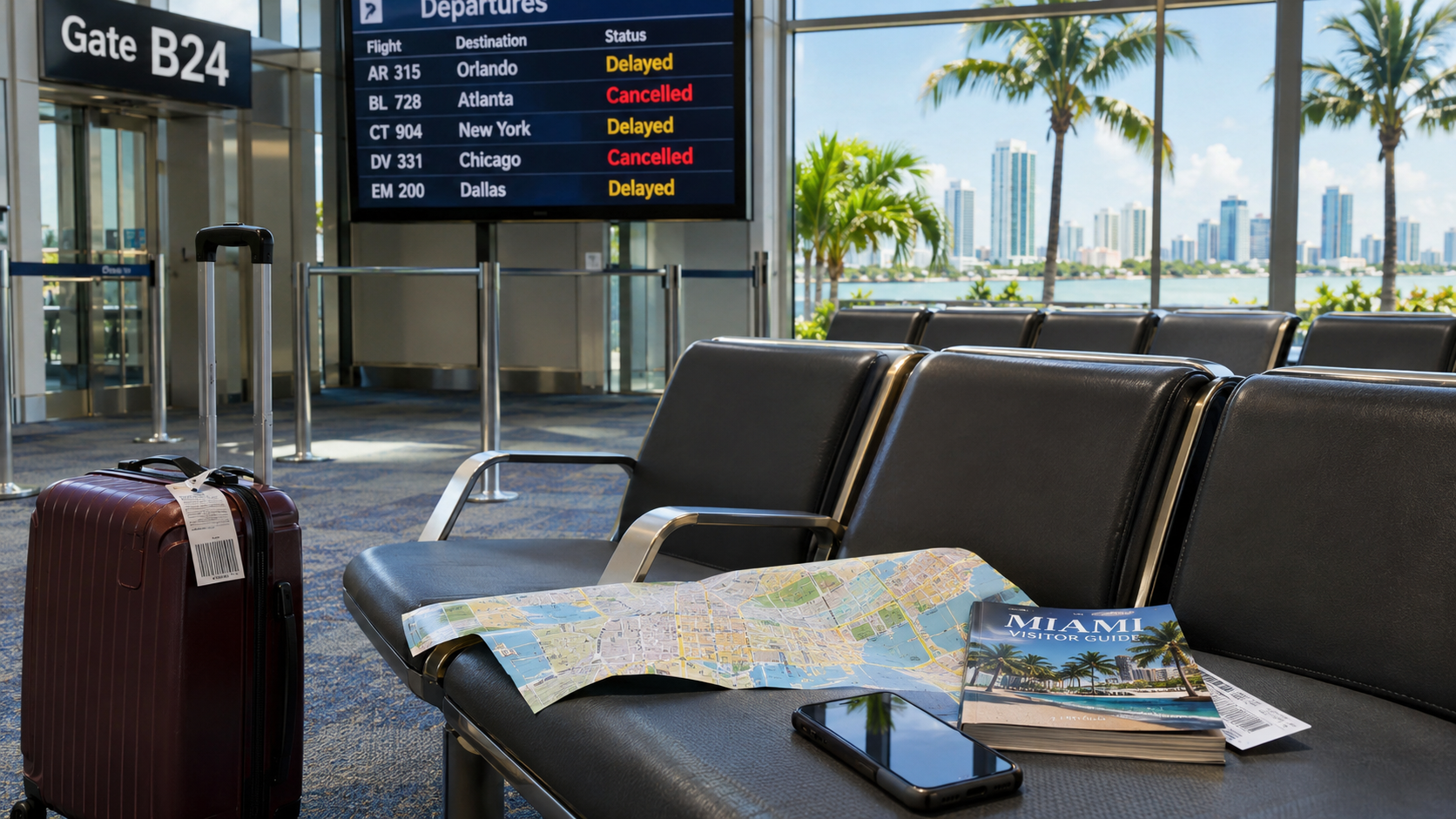
Two weeks ago, our Art Director hopped on a plane to one of the biggest creative industry events of the year, Adobe MAX. Little did she know that the following week, she and many of her fellow conference attendees would find their stay in Miami extended by two additional days after a nationwide flight disruption.
At first glance, an unexpected weekend in Miami does not sound like the worst travel problem to have. But once the novelty wears off, the practical questions arrive quickly: Where should we stay another night? What is nearby? What can we do without a reservation? How do we make use of a day we never planned to have?
And that got us thinking about a topic that is easy to overlook within a destination marketing strategy: Our job does not end when the traveler books the trip or arrives at the destination.
We spend enormous energy inspiring the visit, building demand and helping travelers choose one destination over another. But some of the most memorable moments happen after that decision has already been made, especially when the trip stops going according to plan. A canceled flight. A six-hour delay. An unexpected free afternoon. A weather change. A missed connection.
Travelers still need help after conversion
Traditional marketing strategy tends to focus heavily on getting someone to the destination. But a traveler who is already there is still making decisions.
Where should we eat tonight? What can we do nearby? What is open right now? What can we fit into three unexpected hours?
Sometimes the answer comes from a hotel concierge. Sometimes it is a local recommendation, a Google search, an ad, a creator post, an AI chatbot or a destination article that happens to surface at exactly the right time. Those touchpoints may not drive the original booking, but they can absolutely shape how the trip is remembered.
Because the experience someone talks about when they get home becomes part of the destination story too.
No one wants a canceled flight, and not every travel headache needs to be turned into a silver lining. But when spontaneity is mandatory, destinations have an opportunity to become more useful, more human and more memorable by helping travelers make the most of the moment they are actually in.
Here are a few ways to make the most of that opportunity:
Be easy to find. Make transportation options, visitor resources, current information and useful local guidance accessible across your website and digital channels.
Be useful in the moment. Think beyond the polished three-day itinerary. Where can someone eat after a late arrival? What can a family do with an unexpected afternoon? Which experiences are nearby, flexible and do not require reservations?
Equip the people travelers already trust. Front desk teams, restaurant staff, transportation providers and visitor center employees often become some of the most influential destination marketers once a traveler is in-market. Give partners useful information they can easily share.
Make room for spontaneity. Not every experience needs to be a bucket-list attraction. Highlight walkable neighborhoods, easy local experiences, places near transportation hubs and activities that work without weeks of planning.
The experience is part of the marketing
There is a tendency to separate destination marketing strategy from the visitor experience. But travelers do not make that distinction.
To them, the ad that inspired the trip, the platform that helped plan it, the hotel employee who saved the afternoon and the local recommendation that turned an unwanted delay into a great dinner are all part of the same destination story. That is why strong destination marketing extends beyond the booking.
Not every disruption will become a fond memory. But when plans change, a little useful information, a well-prepared partner and the right recommendation at the right time can make a meaningful difference.
And sometimes, the story travelers remember most is the one nobody planned.